Introduction
GST compliance is a major part of running a construction or real estate contracting business in India. From deciding the correct GST rate to managing invoices, input tax credit, and return filing, every step must be handled carefully to avoid notices and penalties.
If you are a builder, civil contractor, sub-contractor, interior contractor, or real estate service provider, understanding GST compliance for construction and real estate contractors is essential for your business. The GST law has specific rules for works contracts, construction services, and property-related supplies, and a small mistake can create a large tax demand later.
This guide explains the basics in simple language so contractors and real estate businesses can stay compliant and avoid common GST errors.
What Counts as Construction Service
Construction and real estate activities under GST include a wide range of services. These may involve building residential or commercial properties, civil works, repairs, renovations, interior works, electrical fitting, plumbing, and finishing contracts.
In GST terms, many of these activities are treated as works contract services when both goods and services are supplied together in the execution of a contract. This classification matters because the GST rate, ITC eligibility, and billing method depend on how the service is classified.
For real estate contractors, the nature of the project also matters. A contractor working on a residential project may face a different tax treatment than one working on a commercial property or government contract.
GST Registration for Contractors
Registration under GST becomes mandatory when turnover crosses the threshold limit prescribed under law. For most service providers, the limit is ₹20 lakh in normal states and ₹10 lakh in special category states. However, contractors dealing in interstate supplies, e-commerce-based work, or other taxable activities may need registration even before crossing the threshold.
Once registered, the contractor must use the GSTIN on invoices, file returns on time, and maintain records for all project-related transactions. Real estate businesses and main contractors often prefer working with GST-registered vendors because it helps them maintain proper tax credit and compliance records.
Voluntary registration is also common in the construction sector because many clients, especially corporate and institutional clients, require GST-compliant billing.
GST Rate on Construction Work
One of the most important parts of GST for construction contractors is applying the correct tax rate. Construction services can attract different GST rates depending on the type of project and the nature of supply.
In general, works contracts and construction services are commonly taxed at 18%. However, specific residential projects, affordable housing, and certain government works may fall under different treatment based on the applicable notifications and conditions.
Contractors should always check:
- Whether the project is residential or commercial.
- Whether the property is under construction or completed.
- Whether the contract is for a works contract service or pure labor.
- Whether any exemption or concessional rate applies.
Using the wrong rate can lead to tax mismatch, client disputes, and notice issues.
Input Tax Credit for Contractors
Input tax credit for contractors is a major compliance area. Contractors can usually claim ITC on eligible inputs and input services used for business, such as cement, steel, paint, machinery hire, transport, professional fees, and subcontractor services, subject to GST rules.
However, ITC is not always fully available in the construction business. Some expenses may be blocked under GST, and credit on items used for immovable property may be restricted in certain situations. This is why contractors must carefully review every expense before claiming credit.
To claim ITC correctly:
- The supplier must be GST registered.
- A valid tax invoice must be available.
- The invoice must be reflected in GSTR-2B.
- The expense must be used for business.
- The credit must not fall under blocked credit provisions.
Poor ITC planning often creates the biggest GST issues in construction and real estate businesses.
GST Invoice Requirements
A proper GST invoice for construction services should contain all statutory details. These include the supplier’s name, address, GSTIN, invoice number, date, place of supply, service description, taxable value, GST rate, tax amount, and total value.
For contractors, invoice accuracy is critical because real estate projects often involve:
- Stage-wise billing.
- Running account bills.
- Advance payments.
- Retention money.
- Subcontracting arrangements.
- Material plus labor components.
If the invoice is not structured correctly, GST liability may be reported in the wrong period, and clients may face ITC issues. Contractors should also issue invoices within the time prescribed under GST, especially for continuous supply or milestone-based contracts.
Time of Supply in Construction Projects
The time of supply determines when GST becomes payable. In construction and real estate contracts, this is often linked to invoice issuance, payment receipt, or completion of the milestone, depending on the nature of the contract.
For contractors, the challenge is that project billing is often not simple. There may be:
- Advance received before work starts.
- Partial completion billing.
- Delay in certification by project engineers.
- Retention deductions.
- Additional work orders.
Proper timing is necessary because GST liability should be discharged in the correct tax period. If the contractor delays reporting, interest and late fees may apply. Maintaining project-wise billing schedules helps avoid confusion.
Reverse Charge Mechanism
The reverse charge mechanism in construction is another important rule. In certain cases, GST is paid by the recipient instead of the supplier. This can apply in specified transactions or where the law requires a reverse charge under particular provisions.
Contractors should understand reverse charge in:
- Legal services taken from advocates.
- Services from certain unregistered vendors in specific situations.
- Government-notified reverse charge transactions.
- Subcontracting structures, where applicable, compliance needs to be checked carefully.
Whenever a reverse charge applies, the contractor or recipient must account for GST correctly in books and returns. Failure to do so can lead to mismatch and demand notices.
GST Return Filing for Contractors
GST return filing for contractors must be regular and accurate. Most registered contractors file:
- GSTR-1 for outward supplies.
- GSTR-3B for summary tax payment.
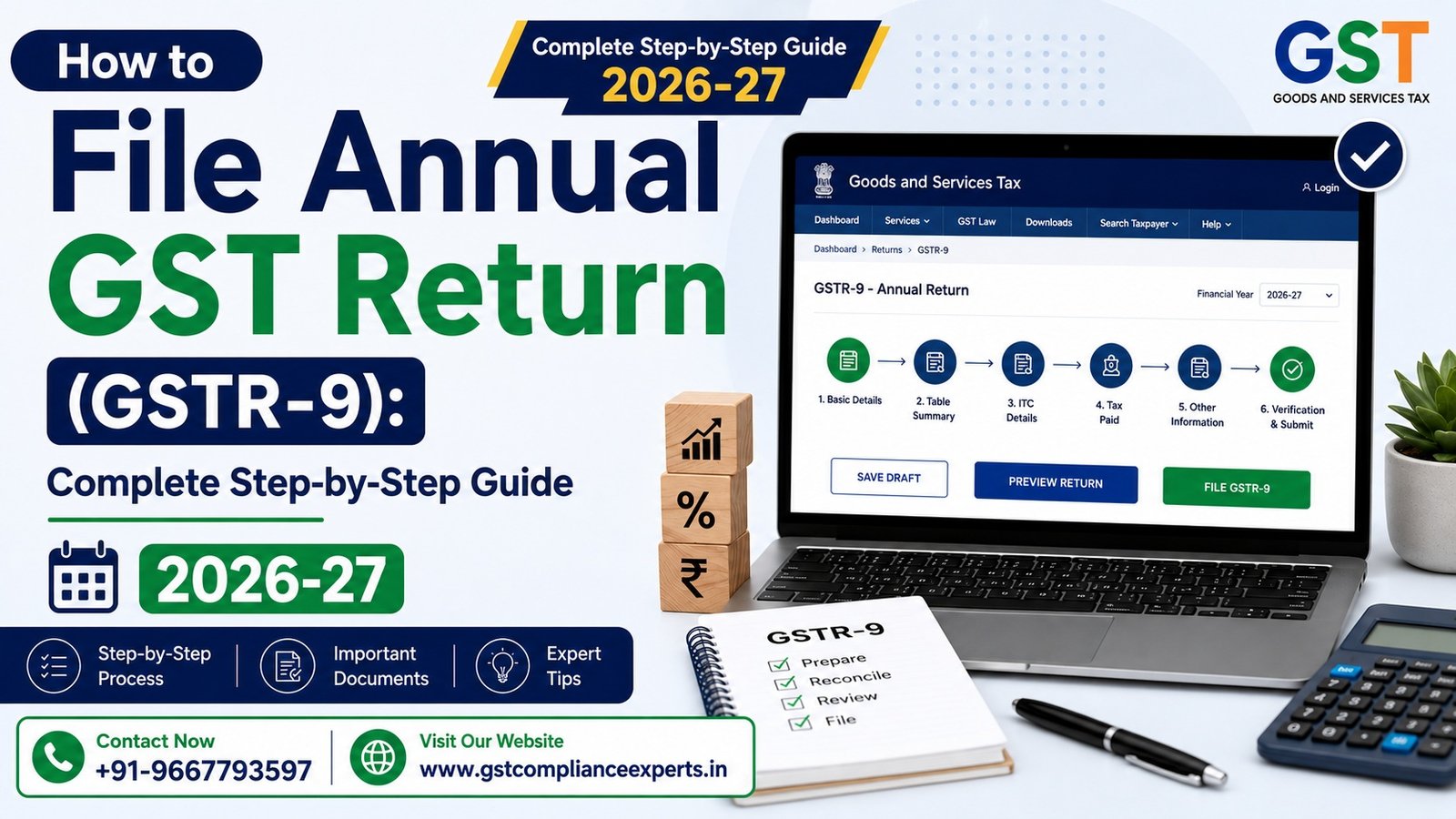
- GSTR-9 for annual return, where applicable.
If the contractor has a higher turnover or complex project accounting, monthly compliance becomes even more important. Return filing should match books, invoices, project receivables, advances, and ITC claims. Any mismatch between GSTR-1, GSTR-3B, and books can trigger scrutiny.
For construction businesses, it is a good practice to maintain project-wise GST records for:
- Client-wise invoices.
- Material purchase invoices.
- Subcontractor bills.
- Advance receipts.
- RCM liabilities.
- ITC claimed and reversed.
GST in Real Estate Projects
Real estate GST compliance becomes more complex because projects often involve land value, construction value, booking advances, cancellation, possession, and transfer of rights. The tax treatment can vary depending on whether the project is residential, commercial, under construction, or completed.
Real estate contractors and service providers should be careful about:
- Whether the project is under a taxable category.
- Whether the supply is a construction service or the sale of immovable property.
- Whether the buyer is eligible for the ITC impact in the chain.
- Whether developer-side compliance is affecting contractor invoices.
Many disputes arise when the contract is not clearly documented or when billing is done without understanding the project structure. Proper contract drafting and accounting help reduce risk.
Common GST Mistakes Contractors Make
Many contractors make avoidable GST errors that later become expensive. Common mistakes include:
- Charging the wrong GST rate.
- Claiming ineligible input tax credit.
- Missing invoice details.
- Not paying GST on advances where applicable.
- Ignoring reverse charge obligations.
- Filing returns without reconciling books.
- Not maintaining project-wise records.
- Treating works contract and pure labor as the same.
These mistakes often lead to exposure to notices, interest, and penalties. A strong compliance system can prevent most of them.
Best Practices for Compliance
To stay compliant, contractors should adopt a few simple habits:
- Use separate project-wise accounting.
- Reconcile invoices monthly.
- Check the vendor GST status before payment.
- File returns on time.
- Review ITC before claiming.
- Maintain copies of contracts and work completion records.
- Keep an eye on GST rate changes and notifications.
For businesses with multiple projects, working with a GST professional can save time and reduce tax risk.
Conclusion
GST compliance for construction and real estate contractors is not just about filing returns. It is about correct classification, proper invoicing, accurate tax payment, and disciplined recordkeeping throughout the project cycle.
Whether you handle civil work, finishing contracts, interior projects, or real estate services, GST mistakes can affect both cash flow and client trust. By understanding the GST rate, ITC rules, reverse charge provisions, and return filing process, contractors can run smoother operations and avoid unnecessary notices.
If your construction or real estate business needs help with GST registration, invoicing, ITC review, or return filing, GST Compliance Experts can help you stay compliant with confidence.